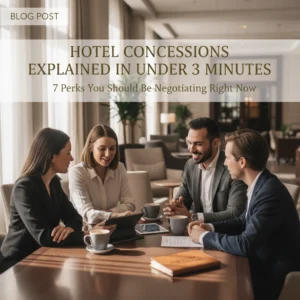

Hotel concessions can make or break your event budget. These special deals and perks that hotels offer event planners are your secret weapon for stretching dollars and impressing attendees without overspending.
If you're planning corporate meetings, hospitality networking events, or any group gathering requiring 10+ hotel rooms, you should be negotiating concessions every single time. Hotels expect it, and frankly, you're leaving money on the table if you don't ask.
Here's what you need to know to negotiate like a pro.
What Are Hotel Concessions?
Hotel concessions are low-cost or complimentary benefits a hotel offers in exchange for your group business. In simple terms, they are the extra perks, discounts, and policy flexibilities you negotiate to increase value without increasing your total spend. For meeting planners, concessions can include anything from comp rooms and waived rental fees to discounted parking, WiFi, and AV.
Hotel concessions are low-cost or complimentary benefits hotels provide in exchange for your group booking. Think of them as value-adds that increase what you get without necessarily increasing what you pay.
The key is timing and leverage. Hotels are most generous with concessions when they need your business: during slower seasons or when they have excess capacity. Your group size, dates, and food and beverage spending all factor into what concessions you can secure.

The 7 Must-Have Concessions Every Meeting Planner Should Negotiate
1. Complimentary Guest Rooms
The Standard: Request one free room-night for every 40-50 rooms your group books.
Here's the math that works: If your corporate meeting planning brings 200 room-nights to a property, you should receive 4-5 complimentary rooms. Use these for your planning team, VIP speakers, or as emergency backup rooms.
Pro tip: Negotiate these rooms as the same category your group is booking, not lesser accommodations. If your attendees are in standard rooms, your comp rooms should be standard rooms too.
2. Meeting Space Rental Waived
When your group commits to a food and beverage minimum, the meeting room rental should disappear from your invoice entirely.
This concession leverages your catering spend to eliminate venue charges. If you're spending $15,000 on breakfast, lunch, and coffee breaks, that meeting room that costs $2,500 per day should be complimentary.
Most hotels readily agree to this when you meet their F&B minimums, but you have to ask explicitly.
3. Complimentary Internet Access
Non-negotiable in 2026. Free WiFi should cover both meeting spaces and guest rooms for your entire group.
Hotels charging $15-25 per room per night for internet can add hundreds or thousands to your budget unnecessarily. This concession is often standard, but always confirm it's included in writing.
For luxury independent hotels and resorts, premium WiFi speeds may be available as an upgrade: negotiate this for your meeting spaces where presentations and video calls require reliable connectivity.

4. Suite Upgrades at No Charge
Request complimentary upgrades to suites for your VIP attendees, keynote speakers, or executive leadership.
Hotels with excess suite inventory, especially during weekdays or off-peak seasons, can often provide 1-10 suite upgrades at no additional cost. Even if they can't comp them entirely, negotiate a flat upgrade fee rather than paying the full suite rate difference.
Target junior suites or parlor rooms first: these are easier concessions to secure than presidential suites.
5. Parking Concessions
Parking fees add up fast. A group of 75 people paying $25 per night for self-parking equals $1,875 per night in unexpected costs.
Negotiate one of these options:
- Complimentary self-parking for all attendees
- Waived valet parking fees
- Discounted parking rates (50% off standard pricing)
- Free parking for a certain number of vehicles
Urban hotels and resort properties are often more flexible on parking concessions than you'd expect.
6. Food & Beverage and Audio-Visual Discounts
Target 10-15% discounts on menu pricing and in-house audio-visual services.
These percentage savings apply directly to your largest expense categories. On a $30,000 catering bill, a 10% discount saves $3,000. For events requiring extensive AV support, these discounts can save thousands more.
Some properties offer tiered discounts based on total F&B spend: the more you commit to, the higher percentage discount you receive.
7. Extended Group Rates and Flexible Policies
Secure group rates for 3-5 days before and after your official event dates. This helps attendees who want to extend their stay or arrive early.
Also negotiate:
- Reduced resort fees (or waived entirely)
- Flexible cancellation policies beyond standard terms
- Two-week reservation cutoff instead of four weeks
- No attrition penalties for reasonable room pickup shortfalls

How to Negotiate These Concessions Successfully
Lead with Your Value Proposition
Hotels want profitable, easy business. Position your group as low-maintenance, high-value guests who will likely return. Mention if your company books multiple events annually or if this could lead to future bookings.
Negotiate During the RFP Process
Don't wait until contracts are signed. Include your concession wishlist in your initial request for proposal. This sets expectations early and allows hotels to factor concessions into their pricing strategy.
If you're sourcing through The Beyond Collection, use that process to your advantage. As a commission-free marketplace where meeting planners connect with luxury independent hotels and resorts, it can help you compare options early, clarify concession asks, and keep negotiations organized across multiple properties.
Use Market Leverage
When you're considering multiple properties, say so. Hotels are more generous when they know they're competing for your business.
This is another place where The Beyond Collection can be useful. When you can evaluate several luxury independent hotels and resorts side by side, you create natural market leverage and give yourself a stronger position to negotiate value-adds beyond room rate alone.
Be Realistic About Timing
High-demand dates = fewer concessions. If you're booking during peak season in a popular destination, focus on the most important 2-3 concessions rather than requesting everything.
Conversely, shoulder seasons and weekday bookings often unlock generous concession packages.
Document Everything
Get all concessions in writing within your contract. Verbal agreements disappear when hotel staff changes, but contract language protects your negotiated benefits.
Making Concessions Work for Hospitality Networking Events
For hospitality networking events specifically, prioritize concessions that enhance the attendee experience:
- Welcome reception hosting (hotel provides space and basic setup)
- Upgraded welcome amenities in guest rooms
- Complimentary business center access
- Extended pool/fitness facility hours for your group
These concessions create memorable experiences that justify attendance and encourage future participation in your events.

Common Concession Mistakes to Avoid
Don't accept the first offer. Hotel sales managers expect negotiation. If they immediately agree to all your requests, you probably didn't ask for enough.
Avoid focusing only on price. Sometimes keeping your rate slightly higher but securing valuable concessions provides better overall value than a lower room rate with no perks.
Don't ignore small properties. Independent hotels and boutique properties often have more flexibility on concessions than major chains with rigid policies.
Ready to Negotiate Like a Pro?
Hotel concessions aren't just nice-to-haves: they're essential tools for delivering successful events within budget. The properties want your business, especially in today's competitive marketplace.
Start with these seven concessions for your next corporate meeting planning project. You'll likely secure 4-5 of them, even as a first-time negotiator.
The key is asking confidently and early in the process. Hotels respect planners who understand the value they bring and negotiate accordingly.
Ready to take your sourcing and negotiation strategy to the next level? Join The Hive to connect with fellow meeting planners, share best practices, and build smarter hotel partnerships at hive.wearebeyond.com.